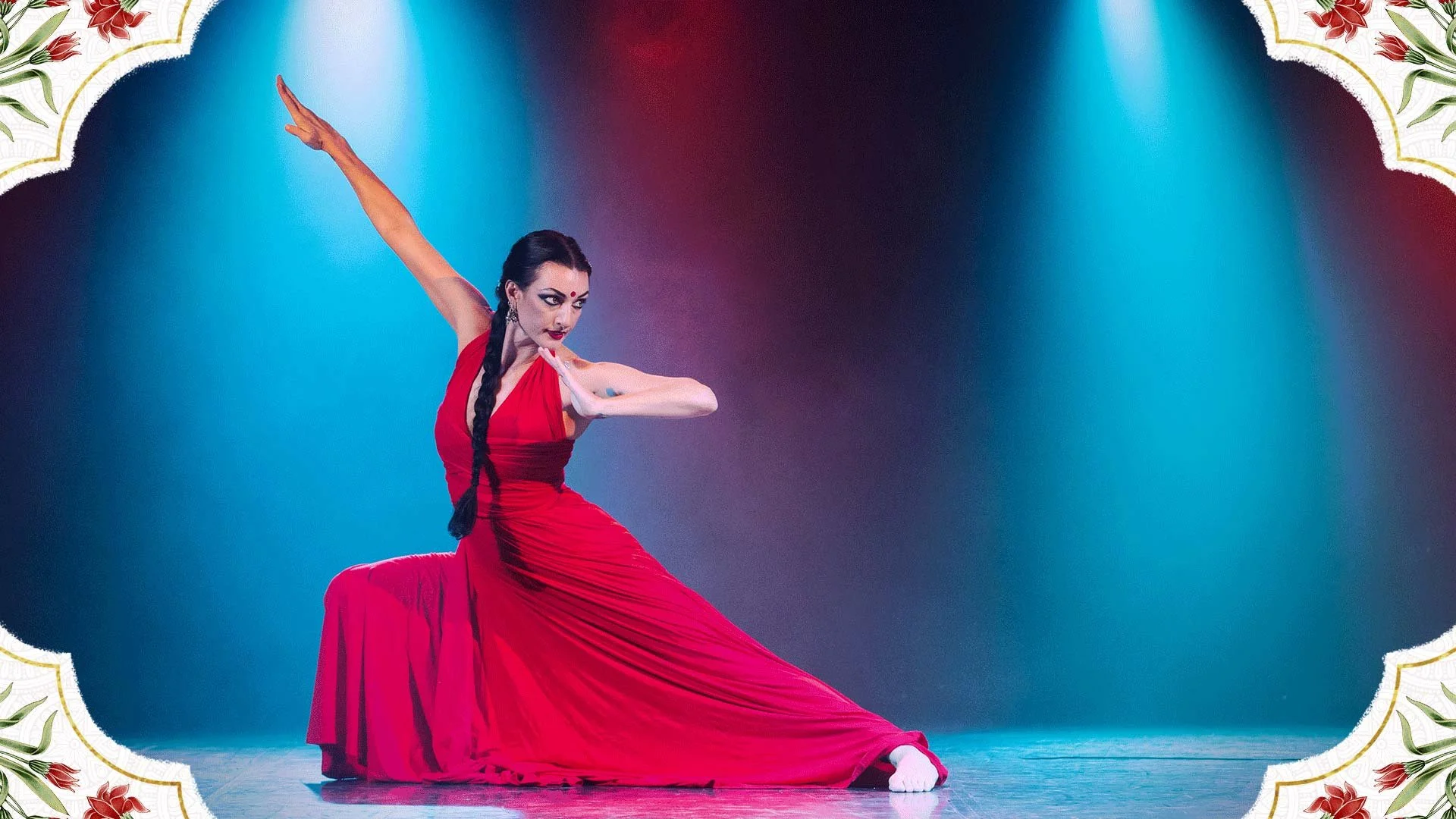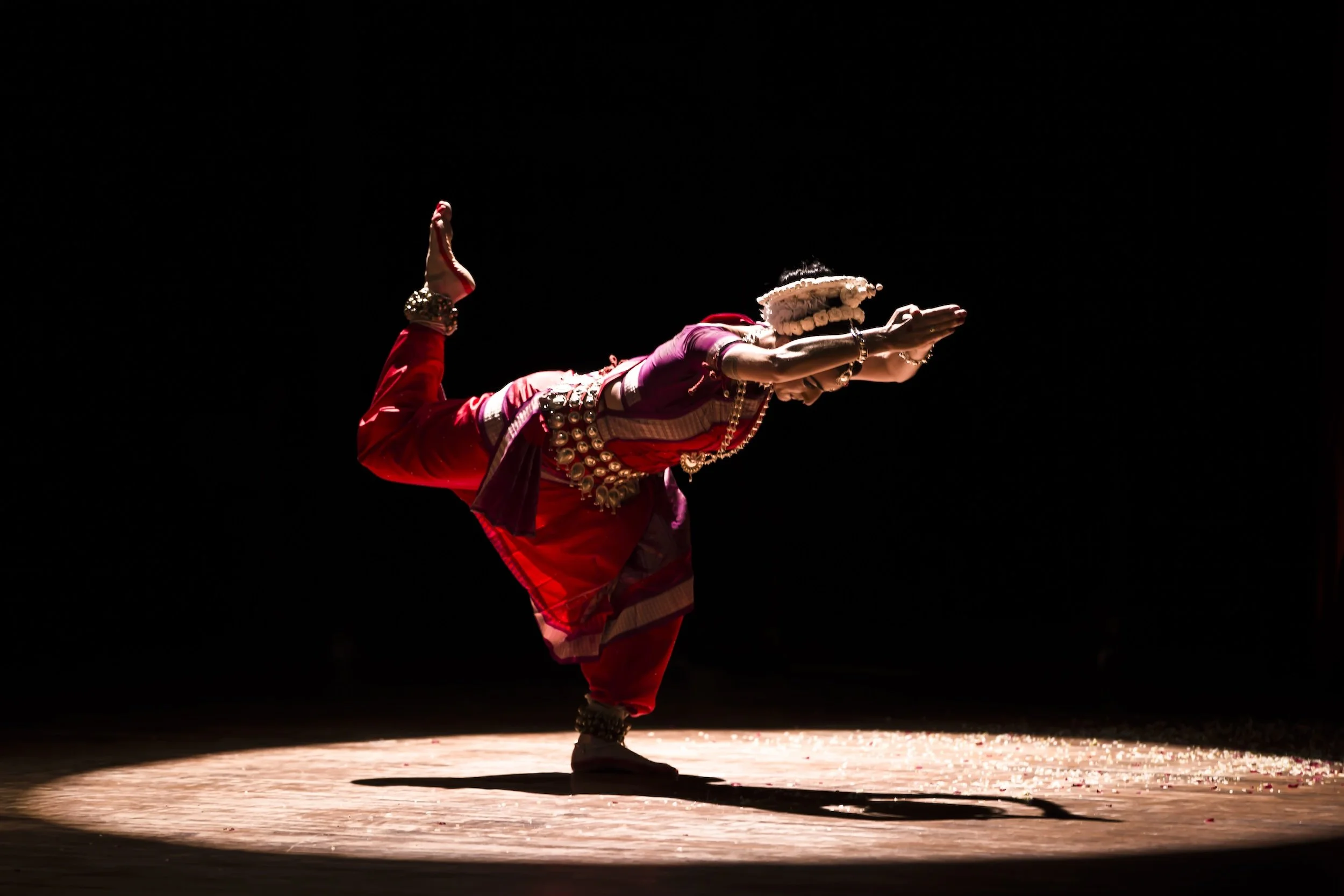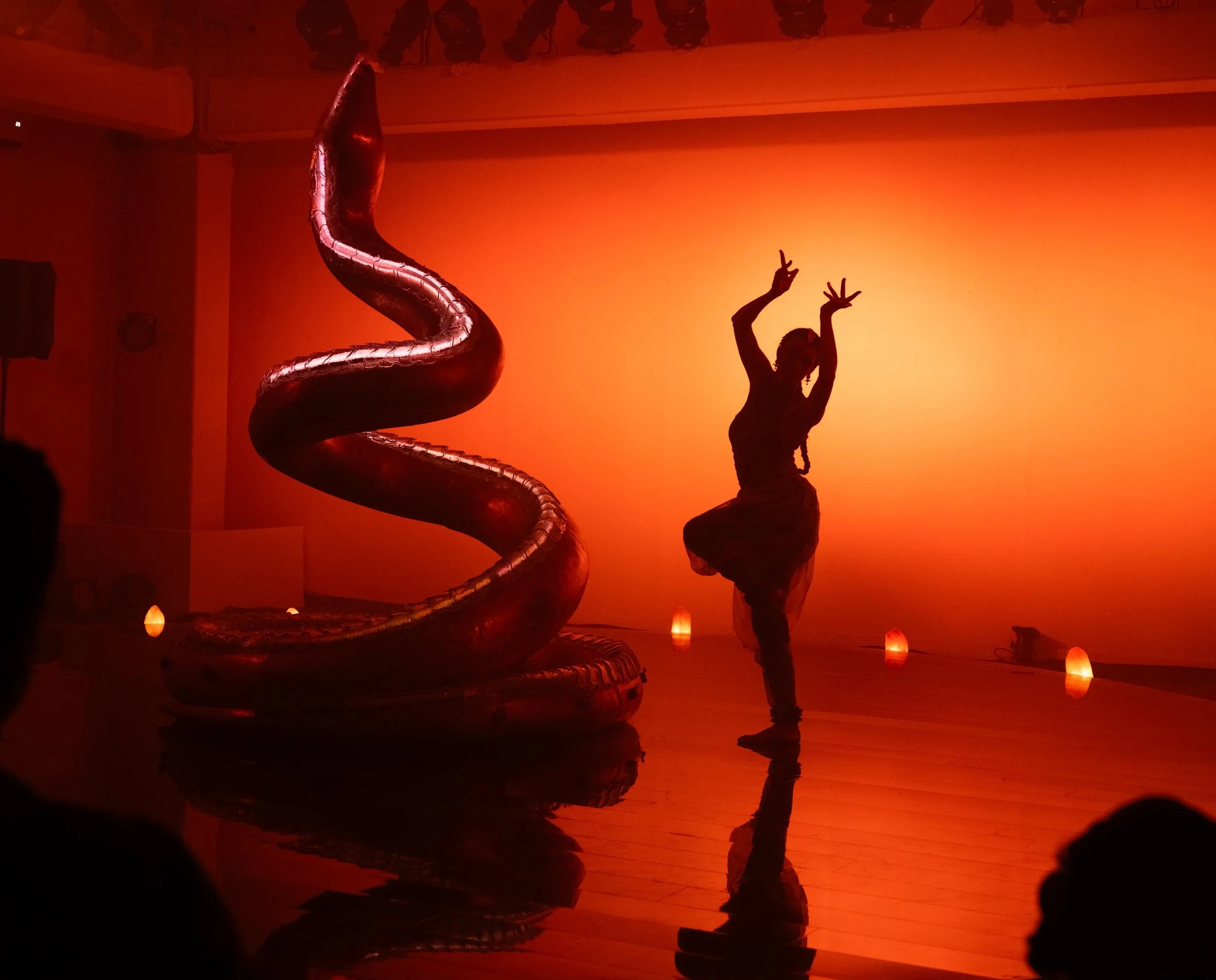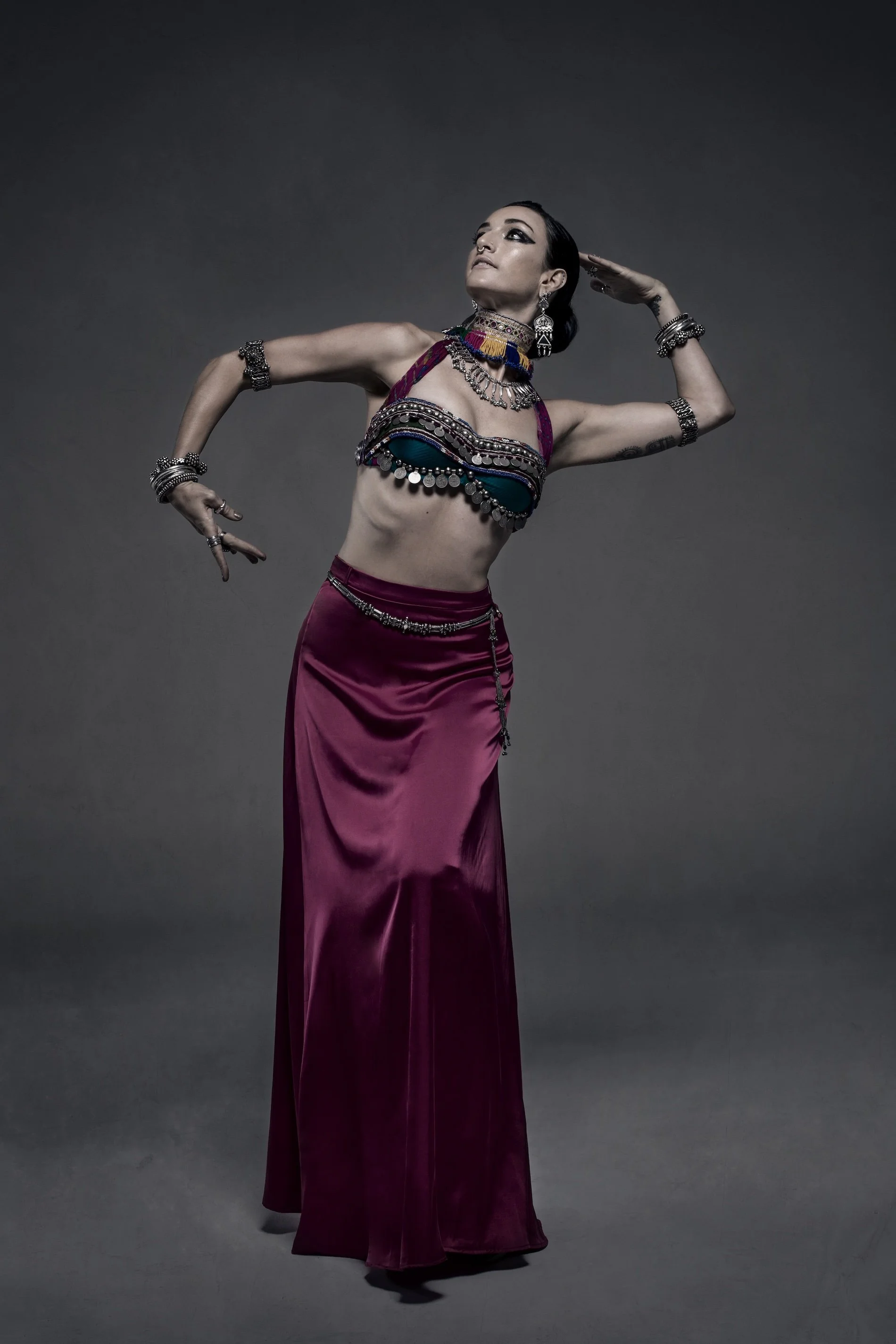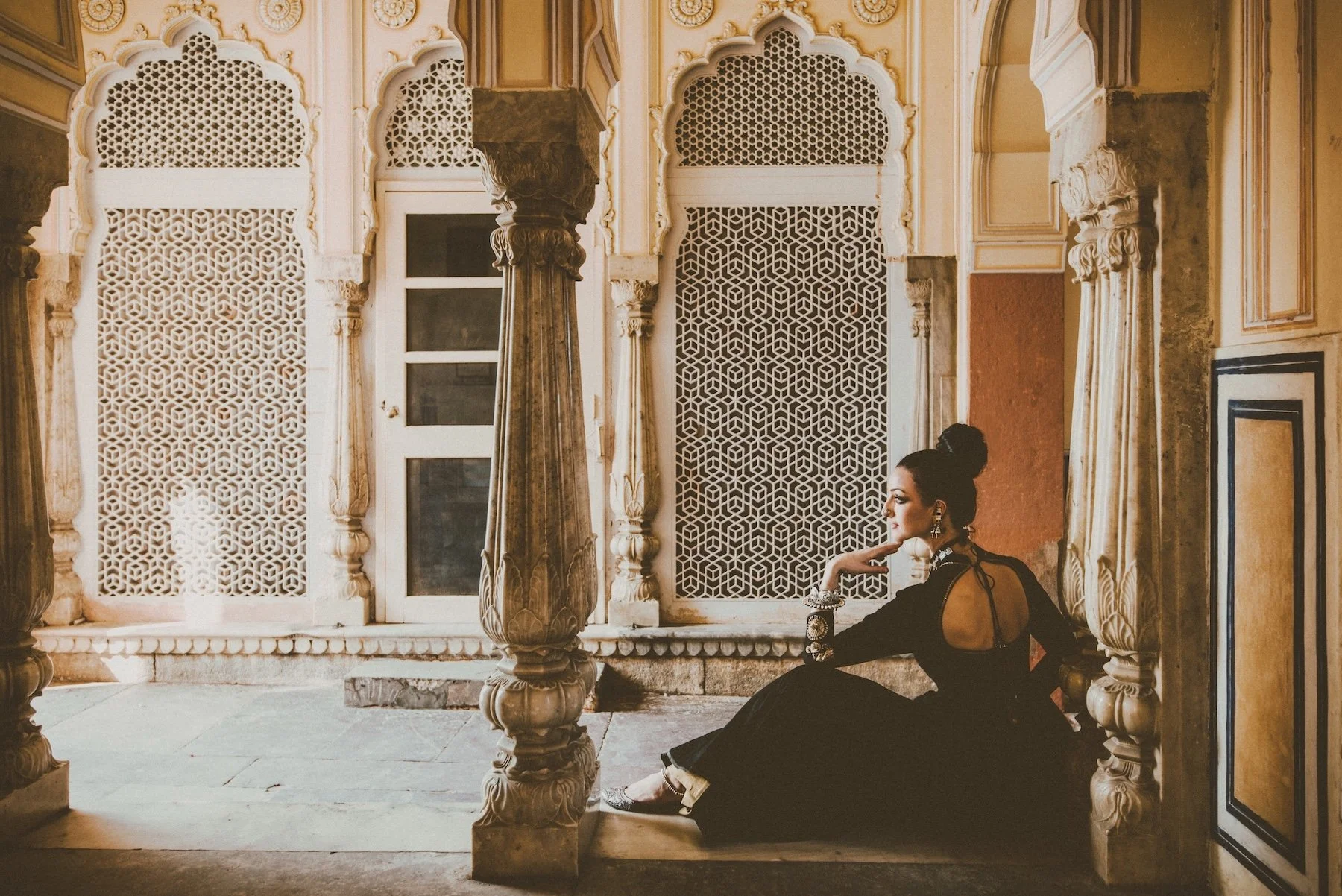

Odissi classical Indian dance originates as a devotional temple dance from the temples of East India and centered around the Jaganath temple at Puri, Orissa.  Today this classical dance is performed before an audience on stage, but it's origional function had a deep spiritual intention both in the performance and the life of the dancer.  Dances such as Odissi were performed by devadasi throughout India within temple rituals.  The dance served as an offering to the Gods as well as a means for devotees to connect to the divine through the dancers own invocation of God as she would portray various Gods / Goddesses in the dance.
 
Odissi is recognized for it’s curvature and rounded movements. Tribungi, one of the main postures of Odissi, is named for its three angles created by the neck, torso and hip alternately angled. Layer upon layer of detail is added to this dance: complex footwork, torso movement, mudra (symbolic hand positions), movement of head and eyes as well as facial expression makes it one of the most technically challenging of the Indian classical dances. This beautiful dance has been passed from guru to student for thousands of years and takes years of dedication to master.

Odissi music is of the North Indian style encompassing flute, vocals, sitar, violin, magira and the pakawaj (a double headed drum also known as mrudunga).  The Natya Shastra draws no barrier between the subjects of drama and dance.  The Odissi repertoire has dance items of both abhinaya and Nritta.  Abhinaya means: storytelling through articulated dance expressions.  It is a dance drama which conveys the mood and meaning of the song.  The solo dancer plays different characters without the aid of props or dress changes, quickly shifting from woman to man or goddess to demon.  Nritta simply means: ornamental dance movements which do not convey a specific story, though themes are utilized.  Odissi dancers are measured by both their skill of precise technique and the ability to conjure deep emotion which can almost be ‘tasted’ by their audience.  Odissi is a high art of subtlest nature which becomes a deep meditative journey to connect with the divine.


Odissi History

In the heavens, Lord Shiva and his consort, the Goddess Parvati taught their dance to Gandarva and Apsara; celestial dancers.  Lord Shiva taught them tandavo dance (furious masculine movements) and the Goddess Parvati taught them lasya (gentle flowing feminine movements).  This knowledge was then gifted to the great sage on earth, Bharat Muni.  Bharat Muni wrote this sacred knowledge down in the Natya Shastra in approximately 200 B.C. to 200 A.D and traveled the earth to teach this rich knowledge.  The Natya Shastra, the first textbook of dance and drama in history,  is something of a dance bible for all dancers in India.

 According to Vedic texts, Dance is considered to be the highest offering one can give God, and should be included in all auspicious occasions. Dance fulfills all desires and assures liberation for the devotee.  As music and dance ‘please the Gods’ and transported both performer and spectator to religious and aesthetic pleasure, dance became a part of daily temple ritual in ancient India.  The popularity of dance in temple ritual grew with the spread of Bhakti cults, since dance performances increased feelings of personal devotion and transported believers into a higher frame of mind. 

Although temple dances varied region to region, the tradition was for more than two millennia, a pan-Indian phenomenon.  Orissa’s most important temple is the Jaganath Temple at Puri.  Here lived one of India’s greatest lineages in the temple dance tradition.  The practitioners of this divine dance were known as devadasi (deva: God, dasi: servant of; literally meaning ‘servant of God’) or mahari (in the Oriya language, literally translates to ‘one who is deeply in love with the Lord’). Girls were adopted at a young age by dance mothers (senior dancing women) who trained them daily in the dance.  When a young devadasi had completed her training in the dance and was ready to perform, she went through a ritual marriage with Lord Jaganath and from this day onward was considered as a wife to God.  Her life was devoted to entertaining and pleasing the Lord.

Temple dancing in an Indian temple was supported by donations from wealthy patrons, particularly kings.  As kingdoms went into periods of conflict and strife, less attention was paid to donating funds to artistic and religious achievements.  Under British rule, the tradition of the devadasi suffered a great lack of funding and support, until finally in the first half of the 20th century, the devadasi tradition ended forever.  After decades of neglect, the late 1950’s saw a careful revival of this Orissan temple dance into what we now call Odissi Classical Dance.  Although the dance is performed on the stage before and audience rather than within temple rituals, the primary feeling of the dance remains that of deep devotion.

The technique of Odissi dance creates a particularly feminine design of the body.  Curved lines of movement, subtle torso movement in contrast with head and eye movement, as well as complex footwork give Odissi dance a distinct charm not seen in the other classical dance styles of India.  The careful concentration required of a dancer to keep a delicate balance between rapid and powerful foot movements in a deep plie (the masculine or tandav, below the navel) in contrast to the soft curves, genuine emotion in the eyes and delicate mudras (the feminine or lasya, above the navel) makes Odissi a balancing meditation; a yoga in movement.
 
Colleena
  In 2001 Colleena began her first few classes of Odissi under Dr. Ratna Roy in Seattle, WA. Tears streamed down her face throughout that first class, Odissi made a swift and heavy mark in her soul at first meeting. After just 3 months of processing the changes that this devotional dance had made in her life she knew she had to make a serious life change to manifest her dream.  On a one way ticket to India, she moved to Bhubaneswar in Orissa, the heartland of Odissi dance. It is here she met her beloved Guru Padma Cheran Dehury. Under his care she continues to train intensively in this beautiful art form at her school in Rajasthan, India: Shakti School of Dance, which annually presents a festival celebrating Odissi classical Indian dance and music (The Pushkar Temple Dance Festival).  Colleena teaches and performs worldwide, sharing with students her love of Odissi classical dance.  Under careful guidance by her Guru, Colleena works to maintain tradition in Odissi and reunite the dance with the spiritual philosophy and meditative intention it origionally imibibed.  


Watch video of Odissi dance


Look at more Odissi photos


International Odissi Dance Workshops


Study Odissi at:  Shakti School of Dance
(Inquire about opportunities for fulltime enrollment)    


Annual Summer Dance Retreat in California, USA